

Audiences ignore or block interruptive outbound ads
Outbound tactics — cold calls, banner ads, unsolicited email blasts — interrupt someone who wasn't looking for a solution, and increasingly people route around them: ad blockers, spam filters, and caller ID all exist to suppress precisely this kind of message. The American Marketing Association's comparison of inbound and outbound frames the shift plainly: outbound pushes a message at a broad, undifferentiated audience, while inbound earns attention from people who are already searching for an answer.
That shift in attention produces a shift in results. Fewer leads arrive from paid interruption alone, because the cost of reaching an uninterested audience keeps climbing while the audience's tolerance for being interrupted keeps falling. Inbound marketing exists as the answer to that decline, and it runs as a sequence, not a single tactic:
- Define a target audience and map its buyer journey — decide who the content is for and what question they're asking at each stage, from first noticing a problem to comparing solutions.
- Publish content assets that answer that audience's questions — articles, guides, videos, or tools built around the specific questions identified in step one.
- Attract visitors through search and social channels — the content has to be findable, which means it's built to rank and built to be shared, not just built to exist.
- Convert visitors with a content offer into leads tracked in a marketing platform — a gated guide, a free tool, or a demo request that captures contact information and logs it somewhere the sales team can see it.
Content marketing is the engine inside step two. It's necessary for the sequence to work, but on its own it only covers one link in a four-step chain — which is exactly why a content programme run in isolation tends to stall at the point where the other three steps would normally take over.
A team publishes content with no audience definition or journey stage
This is the single most common way a content programme underperforms: articles get published on a schedule, but nobody has written down who they're for or what stage of decision-making they're supposed to serve. Without that definition, a team can produce a large volume of technically competent content that never converts, because it was never aimed at a specific reader with a specific next step in mind.
The symptom shows up in analytics before anyone diagnoses the cause: content attracts traffic but no qualified leads. Traffic climbs, time-on-page looks fine, and the pipeline stays flat. The HubSpot comparison of content and inbound marketing makes the underlying point directly — content marketing is one of the tools inbound marketing uses, not a replacement for the strategy that decides where that content leads.
The fix follows a short diagnostic sequence:
- Diagnose the gap: check whether each page or asset has a next step attached — a related offer, a form, a next-stage resource — or whether it ends the moment the reader finishes it.
- Add stage-appropriate offers: a visitor at the awareness stage isn't ready for a sales call, but is often ready for a deeper guide or a checklist; match the offer to the journey stage the content targets.
- Capture leads on a platform: route every offer through a form connected to a CRM or marketing automation tool, so the contact and the content asset that produced it are both recorded.
Traffic without a capture mechanism is an audience, not a pipeline. Closing that gap is what turns content output into inbound results.
Content marketing is a tactic: creating and distributing content
Content marketing is the practice of creating and distributing material — blog posts, videos, guides, podcasts — to reach and hold a defined audience's attention. It is a tactic: a repeatable activity with a clear output, measured by things like traffic, engagement, and shares.
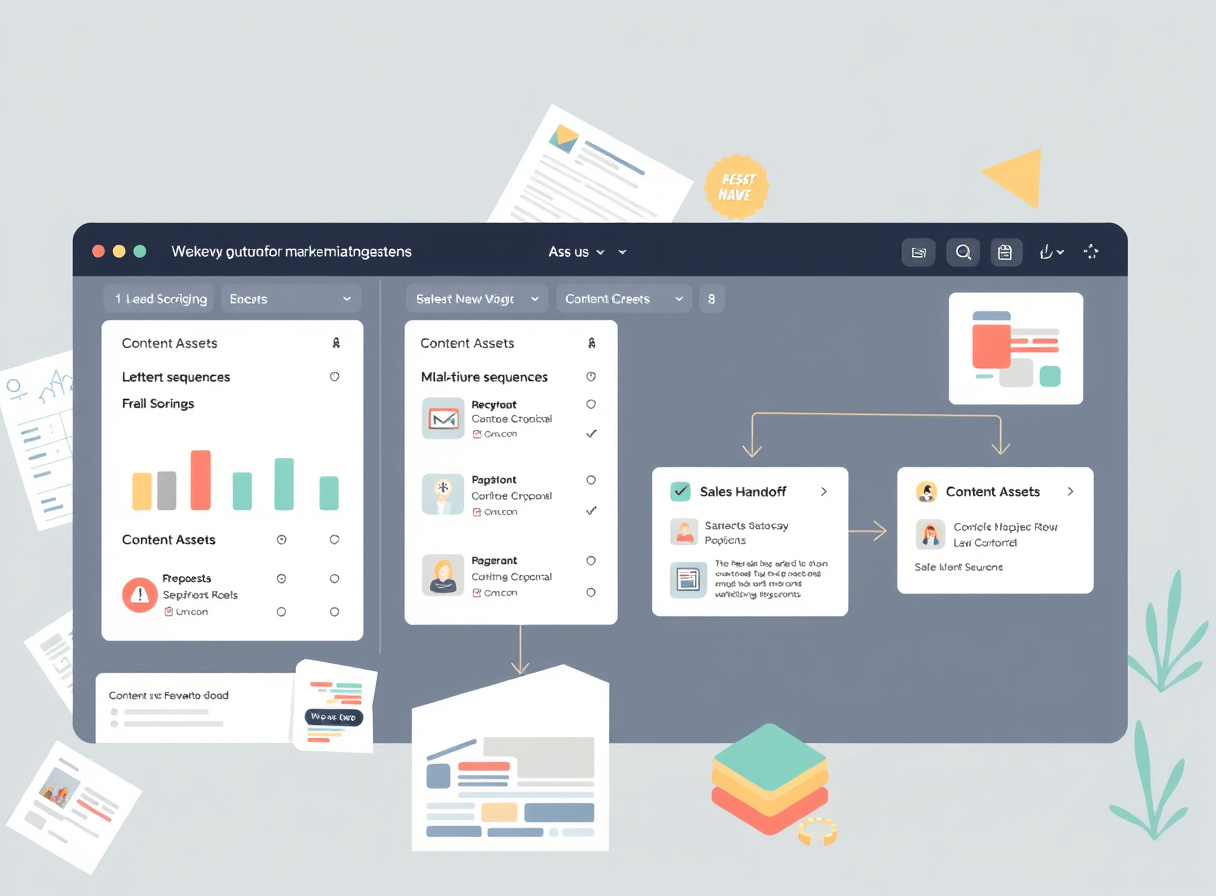
Inbound marketing is the strategy that decides what content gets made, for whom, and what happens after someone reads it. The Salesforce guide to inbound marketing describes it as a full-funnel approach spanning attraction, conversion, and retention — content is one input into that approach, alongside search optimization, lead scoring, email nurturing, and sales handoff.
| Content marketing | Inbound marketing | |
|---|---|---|
| Scope | Tactic: creating and distributing content | Strategy: attract, convert, and keep customers |
| Primary output | Traffic, engagement, shares | Leads, qualified pipeline, retained customers |
| What it requires | Editorial calendar, writers, distribution channels | Audience definition, journey mapping, conversion paths, nurturing, sales handoff |
| Failure mode alone | Traffic with no conversion path | Rarely runs without content — has nothing to attract with |
| Where it's measured | Content-level analytics (views, time on page) | Funnel-level metrics (lead volume, conversion rate, sales-qualified leads) |
Run without each other, both fail in predictable ways. Content marketing without an inbound strategy produces a stack of unattached assets — competent writing that never gets connected to a lead-capture mechanism or a follow-up sequence. Inbound without content has nothing to attract with — the conversion paths, lead scoring, and nurturing sequences exist, but there's no material drawing anyone into them in the first place. The Content Marketing Institute's analysis of the two disciplines argues that content marketing has grown into a discipline broad enough to stand on its own in many organizations — but even there, the argument is about which one leads, not that either can fully replace the other.
Inbound marketing
Inbound marketing is the methodology of attracting customers by earning their attention rather than interrupting it — through content, search visibility, and social presence that meets people at the moment they're already looking for answers. The HubSpot comparison of content and inbound marketing frames inbound as the broader discipline that aligns content and experience with what prospects are already seeking, rather than pushing a message they didn't ask for.
What distinguishes inbound from a content calendar is the presence of a full loop: attract a visitor, convert them into a lead, close them into a customer, and continue serving them content that keeps them engaged. Each stage has its own tactics — search-optimized content for attraction, forms and offers for conversion, email and lifecycle marketing for closing and retention — and the methodology only works when all of them are connected to the same audience definition.
Target audience
A target audience is the defined group of people whose problems, questions, and behavior determine what content gets made and which channels it's distributed through. Without this definition, "content marketing" collapses into publishing for its own sake, since there's no way to judge whether a given piece is useful to anyone in particular.
Defining a target audience for inbound purposes usually means going narrower than a demographic description — it means naming the specific problem a segment of people is trying to solve at a specific point in their process, because that problem is what determines both the content topic and the buyer-journey stage it belongs to. The Salesforce inbound guide treats audience definition as the first and most consequential step in the methodology, since every later step — content topics, channel choice, offer design — depends on getting it right.
Social media
Social media is the channel inbound programmes use to distribute content and hold conversations with an audience after it's published, rather than the place the content is created. Its job in the sequence is distribution and engagement: putting a piece of content in front of people who already follow a brand, and giving them a way to share it further.
Treated as a distribution channel rather than a strategy in itself, social media sits downstream of both the audience definition and the content itself — a post only works if there's a defined audience it's meant to reach and a piece of content worth sharing with them. Used this way, it functions as one of several attraction channels alongside organic search, not as a separate marketing programme.
Lead
A lead is a contact captured through inbound content — typically someone who exchanged an email address or other contact information for an offer, a download, or a subscription. It's the primary measured output of an inbound programme, because it marks the point where an anonymous visitor becomes someone a sales or marketing team can follow up with directly.
Leads are not the same as traffic, and treating them interchangeably is where many content-only programmes lose track of performance. A page can draw thousands of visits and produce zero leads if it has no offer attached; conversely, a lower-traffic page with a well-matched offer for its audience's journey stage can outproduce it. Judging inbound performance by traffic alone, rather than by leads generated per asset, is one of the more common measurement mistakes — and one of the least discussed, since most write-ups on inbound mention leads as a goal without describing how to attribute a given lead back to the specific asset, channel, and journey stage that produced it. Doing that attribution well generally requires tagging each offer and form with its source content in the marketing platform, so that lead volume can be broken down by asset rather than reported only in aggregate.
Marketing strategy
Marketing strategy is the plan that sequences audience, content, and channels into a coherent programme — and it's the layer that distinguishes inbound as a strategy from content marketing as one of its tactics. A strategy decides which audience segments get served which content, on which channels, in what order, and how each conversion feeds into the next stage of a funnel.
Content marketing can exist without a documented strategy — a team can simply decide to publish and see what happens — but inbound marketing cannot, because its defining feature is the sequencing itself: attract, convert, close, delight. The comparison from Lifting Group on inbound versus content marketing makes this the central distinction — content marketing is what gets produced, inbound marketing is the strategic framework that decides what gets produced and why.
Outbound marketing
Outbound marketing is interruption-based promotion — advertising, cold outreach, direct mail — pushed at an audience regardless of whether they've expressed interest, and it's the contrast case that makes inbound's logic legible. Where inbound earns attention by matching content to an existing question, outbound buys attention by inserting a message into a space the audience wasn't seeking it in.
The AMA's comparison of the two approaches notes that outbound still has a role — brand awareness campaigns and time-sensitive promotions often need the reach outbound provides — but that its cost structure works differently from inbound's: outbound spend produces a burst of reach that stops the moment the spend stops, while inbound content continues to attract traffic and leads well after it's published, at a lower marginal cost per lead over time. That difference in timeframe is also the difference in how each is budgeted: outbound is generally priced and evaluated per campaign, inbound per asset's lifetime yield.
Buyer journey
The buyer journey is the sequence of stages a prospect moves through — commonly described as awareness, consideration, and decision — and it's the framework inbound programmes use to decide which content gets served to whom, and when. A visitor who just discovered they have a problem needs a different piece of content than one who is comparing two named vendors.
Mapping content to journey stage is what keeps an inbound programme from serving a hard sales pitch to someone who hasn't yet defined their problem, or a generic educational piece to someone who's ready to buy. The Leadpages guide to building an inbound content strategy treats this mapping as a prerequisite step: each piece of content should be built with a specific stage in mind, and the offer attached to it should match that stage rather than defaulting to the same demo request across every page.
Choosing content alone versus a full inbound programme
The decision usually comes down to team size, sales cycle length, and how much of the funnel already exists outside the content itself. A one- or two-person marketing function selling a product with a short, low-consideration sales cycle can often run content marketing alone effectively, publishing and distributing material that drives direct, self-serve conversions without a heavy nurturing layer behind it.
A longer or higher-consideration sales cycle changes the calculation. Once a purchase decision involves multiple stakeholders, a multi-week or multi-month evaluation, or a handoff from marketing to a sales team, content on its own has no mechanism for keeping a prospect engaged between the first visit and the eventual purchase — that's the job of the conversion paths, lead scoring, and nurturing sequences that content marketing alone doesn't include. At that point, the additional cost of building out a full inbound programme — a marketing platform for lead capture and scoring, defined offers per journey stage, and a documented handoff process to sales — tends to be justified by the length of the gap it has to bridge. Teams selling a low-cost, single-decision-maker product rarely need that scaffolding; teams selling anything that requires sustained follow-up almost always do.
What to check to know if it's working
Judging whether an inbound programme is working means tracking leads back to the specific asset and channel that produced them, not just watching traffic totals rise. That requires tagging every offer with its source content inside a marketing platform, so a lead can be attributed to the guide, page, or campaign that captured it rather than reported only as part of an aggregate monthly count.
Timeframe matters as much as attribution. Inbound content typically takes longer to produce leads than an outbound campaign takes to produce clicks, since organic content has to be published, indexed, and found before it can convert anyone — a process that plays out over weeks or months rather than the days a paid campaign runs on. Judging an inbound asset's performance against an outbound campaign's timeline, or cutting it before it has had time to be found through search, produces a false read on whether the content strategy is failing. The practical check is to compare lead volume per asset against its own baseline over a period of months, not against a paid campaign's immediate return — and to keep watching an asset's lead contribution well past its publish date before deciding whether to keep, revise, or retire it.